
What Is a Driveway Notification System? A Guide for Homeowners

Updated: Jun 23
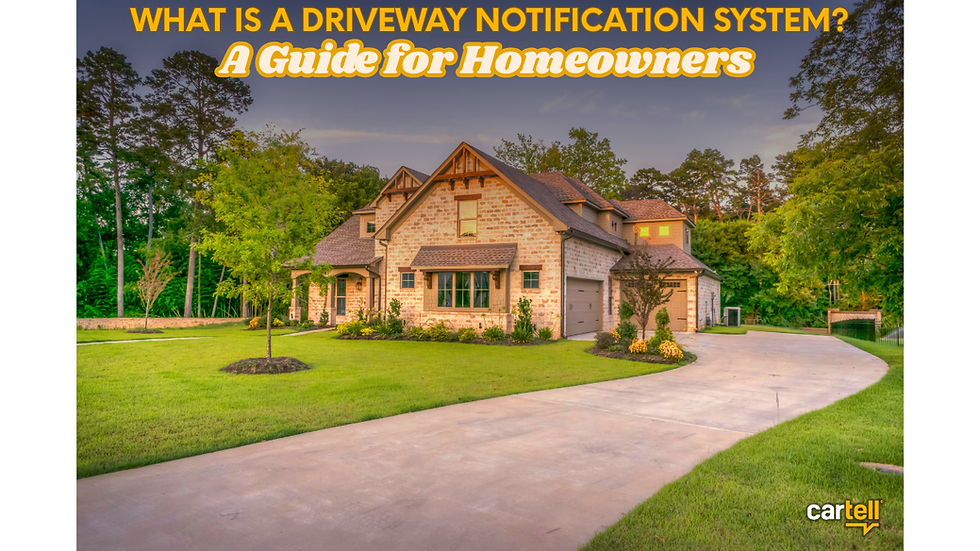
For many homeowners, the driveway is the first place where activity begins. Before a guest reaches the front door, a delivery driver walks up to the porch, or a contractor arrives at the garage, their vehicle usually enters the driveway first.
A driveway notification system is designed to make that moment easier to notice by letting you know when a vehicle enters or approaches your driveway.
In simple terms, it works like a doorbell for your driveway.

When a vehicle enters the detection area, the system sends a signal to notify you. Depending on the system, that notification may come through an indoor sounder, an app notification (coming soon), a gate system or other connected equipment.
How a Driveway Notification System Works
Although driveway notification systems can vary in design, most of them have two main jobs: they detect activity near the driveway, and they send a notification when that activity occurs. The detection point is usually placed near the driveway entrance, along the driveway, near a gate, or near another important vehicle path. The notification is then sent to the homeowner or property owner through whatever method the system supports.
Some systems are simple and send a signal to an indoor chime or receiver. Others may connect with phone notifications, gates, cameras, lights, sounders, or automation equipment. The right setup depends on the property and how the owner wants to receive the alert.
For example, a gated property may need vehicle detection connected to a gate operator or broader automation system. A business may want the system to notify staff when a customer, delivery truck, or service vehicle enters the property.
The basic idea remains the same: when a vehicle arrives, the system helps make that arrival known.
What Does a Driveway Notification System Detect?
Not all driveway notification systems detect the same type of activity. Some systems are based on motion. Others may respond to light, heat, pressure, or general movement. Some systems, like Cartell’s, use Magnetometer Technology, which is designed to detect large moving metal objects such as vehicles, motorcycles, golf carts, utility vehicles, and other equipment commonly found around residential, rural, and commercial properties.
This distinction matters because a driveway is not a quiet, motionless environment. Depending on the property, there may be animals, branches, shadows, headlights, or other types of activity. If a system is based only on general motion, it may notify the homeowner about activity that is not actually related to a vehicle arriving.
A Magnetometer-based system is more specific. Instead of simply asking,
“Did something move?” it is designed around the more focused question,
“Did a vehicle or large moving object arrive?”
For many homeowners and property owners, that is the alert they actually want. They may not need to know every time something moves near the driveway. They want to know when a car, truck, delivery van, contractor vehicle, guest vehicle, or service vehicle enters the property.

Why Unnecessary Notifications Matter
A notification system is only valuable if the homeowner trusts the notification. If alerts happen too often for activity that does not matter, the alert can lose its meaning over time. The goal is not simply to receive more notifications. The goal is to receive the right notification at the right time.
That is why vehicle-focused detection can be helpful for driveway applications: it keeps the system centered on the event many property owners care about most: knowing when a vehicle has arrived.
Who Should Consider a Driveway Notification System?
A driveway notification system can be useful for many different types of properties, but it is especially helpful when the driveway, private road, or vehicle approach area is not easy to see or hear from inside the home or building.
For homeowners, it can provide everyday awareness when guests, family members, deliveries, contractors, or service vehicles arrive. This is especially useful if the home is set back from the road, the driveway is long, or the main entrance is not visible from inside.
For rural properties and farms, a driveway notification system can help identify vehicle activity around long private roads, barns, shops, or equipment areas. On larger properties, the driveway may not simply be a place to park. It may be the main point of arrival for visitors, vendors, workers, and deliveries.
For gated properties, driveway notification systems can also assist with vehicle exit awareness and automation. In many gated layouts, the driveway sensor is positioned farther inside the property rather than directly at the roadway entrance, helping reduce unwanted alerts from nearby cross traffic. This can allow residents or staff to know when vehicles are leaving the property and, in some systems, help automate free-exit gate operation without requiring someone to manually open the gate.
Businesses can also benefit from driveway notification systems. A shop, warehouse, office, service entrance, or gated commercial property may want to know when customers, delivery trucks, vendors, staff, or service vehicles arrive. In these situations, vehicle arrival awareness can help staff respond more quickly and keep daily operations running smoothly.

Where Should a Driveway Notification System Be Installed?
The best placement depends on the layout of the property and the purpose of the system. Some homeowners may want detection near the driveway entrance, so they know as soon as a vehicle arrives. Others may want detection near a gate, garage, shop, barn, or service entrance. Larger properties may need more than one detection point if there are multiple entrances or important vehicle paths.
For long driveways, placement is especially important. If the system is installed too close to the house, the homeowner may lose the benefit of early awareness. If the goal is to know when a vehicle first enters the property, the detection point should usually be closer to the entrance or another key point along the driveway.
Before choosing a location, it helps to think through the property carefully.
Where do vehicles first enter?
Where is the earliest useful point to receive a notification?
Is there a gate?
Is the driveway curved, wooded, hidden, or unusually long?
Are there multiple vehicle paths?
Is the goal to know when vehicles enter the property, approach the house, or reach a specific area?

For Cartell customers, technical support is available to help answer installation questions and make sure the system is being used properly for the property layout.
What to Look For in a Driveway Notification System
The right driveway notification system depends on the property, but a few factors are important for most homeowners.
The first is the type of detection. If the main goal is knowing when vehicles arrive, it makes sense to look for a system designed around vehicle detection rather than general motion detection. For more information on the types of driveway detection systems you could install, visit our latest blog: Best Driveway Systems for Long Driveways (2026 Guide)
Range is also important, especially for long driveways or large properties. A system that works well for a short driveway may not be the right fit for a long rural entrance, farm road, or gated property. The distance between the detection point and the receiver or connected equipment should be considered before choosing a system.
Notification style is also important. Some property owners may only need a simple indoor sounder, while others may want the system connected to a gate, camera, light, sounder, or other equipment. The right setup depends on how the property is used and how the owner wants to receive the alert.

Why Choose Cartell Systems?
Cartell specializes in driveway notification and vehicle detection systems for homes, businesses, farms, long driveways, and gated properties. Cartell systems are designed around vehicle detection rather than general motion detection, which makes them a strong fit for property owners who want to know when vehicles enter their driveway.
Using magnetometer technology, Cartell systems are designed to detect moving steel vehicles rather than light, motion, heat, or pressure. This allows the system to focus on vehicle activity instead of every movement near the driveway.
For homeowners who want a simple driveway notification system, Cartell offers options designed to notify you when vehicles arrive. (CW-CON System)
For property owners who want phone connectivity, Cartell offers app-connected notification options. (coming soon) (CW-HUB System)
For gates and automation, Cartell systems can connect vehicle detection with gate operators, lights, cameras, sounders, and other equipment depending on the system and application. (CW-SYS System)
The purpose is simple: to help property owners know when a vehicle enters the driveway, without relying on general motion detection from every branch, shadow, or movement near the driveway. That focus on vehicle activity is what makes Cartell different.
Final Thoughts
The best driveway notification system depends on the property, the driveway layout, and the type of activity the owner wants to know about. If the goal is general movement awareness, a motion sensor may be enough. But if the main goal is knowing when vehicles arrive, a vehicle detection system is usually the better fit. For many homes, farms, businesses, and gated properties, the most useful notification is simple: knowing when a vehicle has entered the driveway.
Looking for a driveway notification system designed around vehicle detection?
Explore Cartell systems for homes, businesses, farms, gates, and long driveways.


Comments